• New
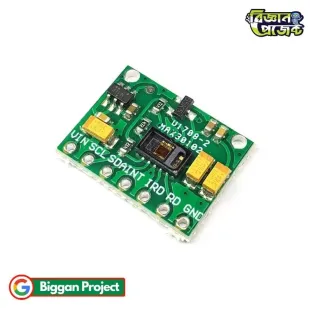
Buy MAX30100 Heart Rate and SpO2 Sensor Module Online
zoom_out_map
Buy MAX30100 Heart Rate and SpO2 Sensor Module Online

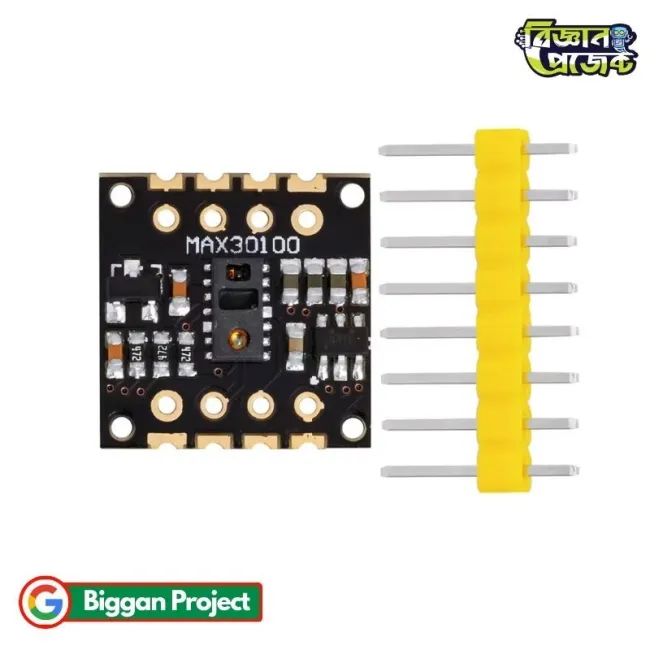
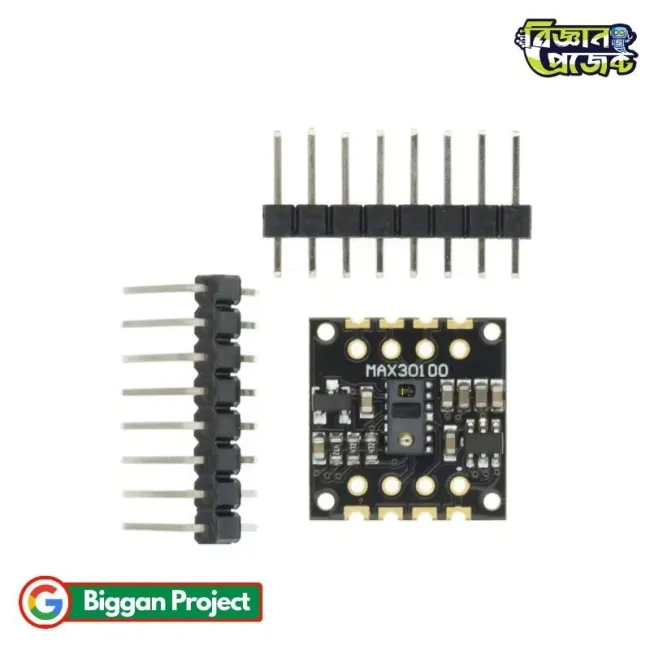
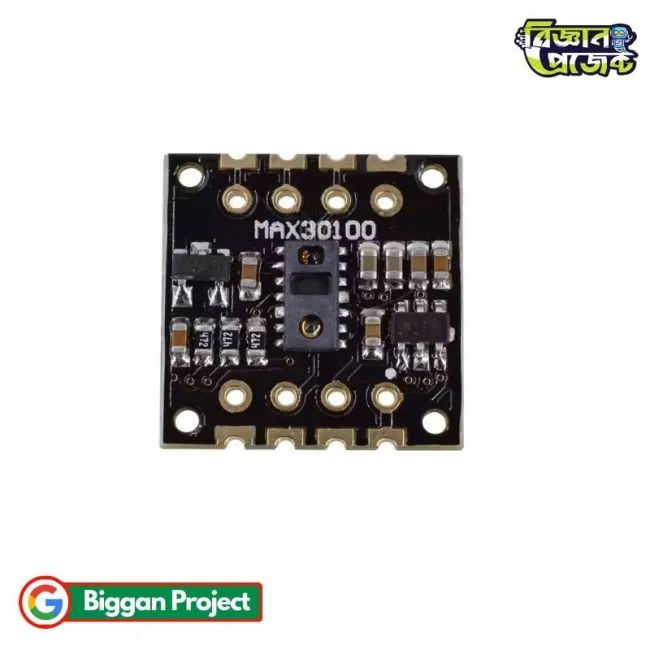
MAX30100 Heart Rate and SpO2 Sensor Module

China
BP-0553
New
৳280
Quantity
In Stock

🚚 হোম ডেলিভারি চার্জ
ঢাকা শহরের ভিতরে৮০৳
ঢাকা উপশহরে১২০৳
বাকি সকল (জেলা / থানা / গ্রামে)১৩০৳
📦 ১টি আইটেম হোক বা ১০০টি আইটেম, ডেলিভারি চার্জ মাত্র একবারই দিতে হবে।
🧰 প্রজেক্ট/বড় পণ্যের ক্ষেত্রে আকার ও ওজন অনুযায়ী চার্জ পরিবর্তন হতে পারে।
⚠️ ফেইক অর্ডার প্রতিরোধে ডেলিভারি চার্জ হিসেবে ১০০ টাকা অগ্রিম নেওয়া হতে পারে।

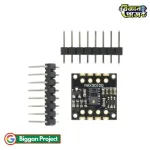
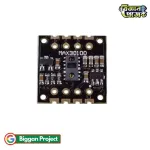
MAX30100 Pulse Oximeter and Heart Rate Monitor Module

The MAX30100 is an integrated pulse oximetry and heart rate monitor module designed for wearable health devices, medical monitoring, and IoT applications. It combines two LEDs, a photodetector, optimized optics, and low-noise analog signal processing to detect blood oxygen (SpO2) and pulse signals. Operating via an I2C communication interface with ambient light cancellation, this compact sensor is fully compatible with Arduino, ESP32, STM32, and Raspberry Pi platforms.
Specifications

  • Chipset: MAX30100
  • Functionality: Blood Oxygen (SpO2) and Heart Rate Monitoring
  • Communication Interface: I2C
  • Operating Voltage: 1.8V – 3.3V
  • Standby Current: 0.7µA (Ultra-Low Power)
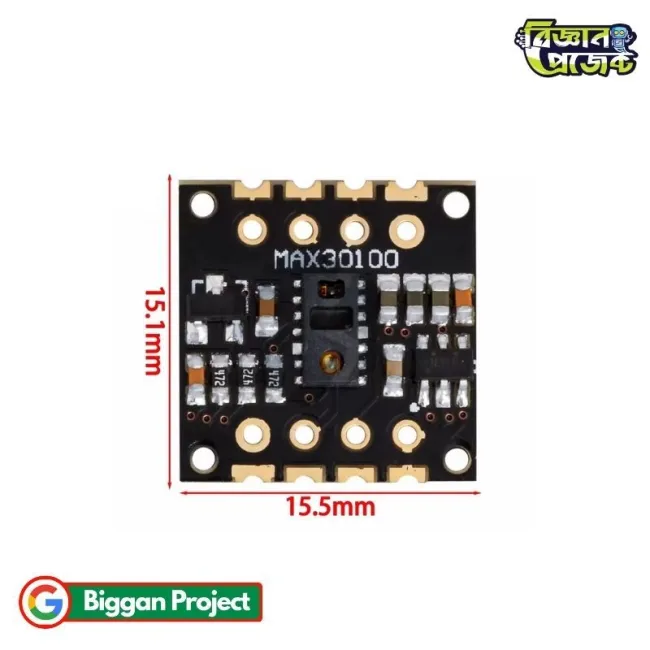
  • Dimensions: 15.26 × 15.18 × 2.55 mm
  • Weight: 0.8g
  • Operating Temperature: -40°C to +85°C
  • Features: Ambient light cancellation, programmable LED current and sample rate
Comments (0)

2 other products in the same category:

25 other products from Sensor & Modules category:

Related Products

IR Sensor

Temp & Humidity

Gas Sensors

PIR & Motion Sensor

Arduino Boards

ESP8266 Boards

ESP32 Boards

MAX30100 Pulse Oximeter and Heart Rate Sensor Module for DIY Electronics

The MAX30100 is an integrated pulse oximetry and heart rate monitor sensor solution designed for embedded electronics, wearable health monitors, and medical IoT devices. By combining two optical LEDs (red and infrared), a photodetector, optimized optics, and low-noise analog signal processing, it captures precise photoplethysmogram (PPG) signals directly from a user's finger. This module measures blood oxygen saturation levels (SpO2) and pulse rates reliably, making it an essential component for university research, health technology prototyping, and student Biggan Project applications in BD. Its compact physical footprint and low operating power allow seamless integration into battery-operated wearable hardware across Bangladesh.
Operating over an I2C communication interface, the MAX30100 module communicates effortlessly with major microcontroller platforms including Arduino, ESP32, STM32, and Raspberry Pi. Built-in ambient light cancellation minimizes interference from external light sources, ensuring stable data acquisition under varying lighting environments. Whether you are building an automated patient monitoring setup, a smart fitness band, or an academic electronics showcase, this sensor offers a balanced combination of high sensitivity, low power consumption, and simple wiring requirements.

Specifications

Specification Details
Chipset MAX30100
Measurement Functions Blood Oxygen Saturation (SpO2) and Heart Rate Monitoring
Communication Protocol I2C (Inter-Integrated Circuit)
Operating Voltage 1.8V to 3.3V DC
Standby Current 0.7 µA (Ultra-Low Power Mode)
Sampling Rate & LED Current Programmable via Software Libraries
Board Dimensions 15.26 mm × 15.18 mm × 2.55 mm
Module Weight 0.8 grams
Operating Temperature Range -40°C to +85°C

Features

  • Dual measurement capability combining SpO2 and pulse detection in a single footprint.
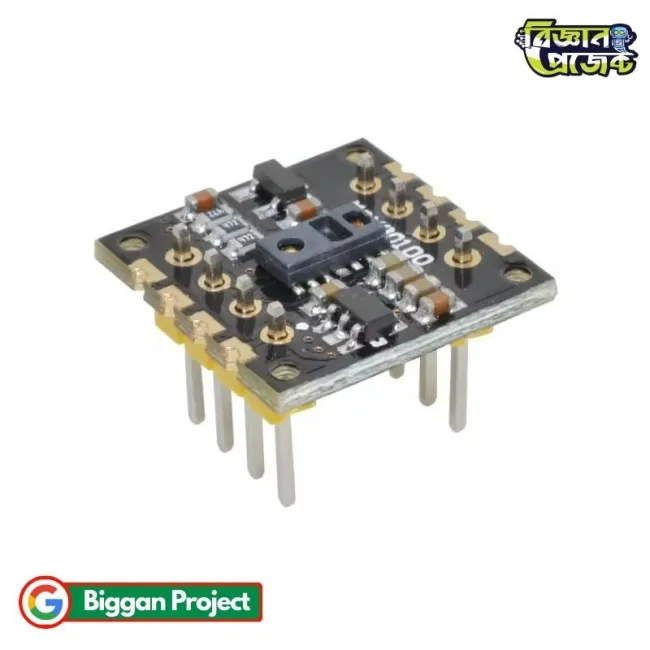
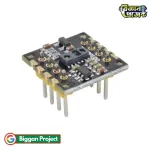
  • Integrated optical assembly containing red LED, infrared LED, and photodetector.
  • Built-in ambient light rejection to prevent measurement drift from surrounding room light.
  • Ultra-low power standby mode consuming only 0.7 µA to prolong battery life.
  • Standard I2C bus interface providing high compatibility with development boards.
  • Programmable sample rates and customizable LED current settings for tailored performance.
  • Small and lightweight PCB design suitable for portable and wearable hardware projects.

Applications / Use Cases

  • Wearable fitness trackers and smartwatches for real-time pulse monitoring.
  • Remote patient monitoring systems and medical IoT health hubs.
  • Athletic training monitoring systems to track heart rate during exercise.
  • Academic engineering demos, university science fairs, and Biggan Project setups in BD.
  • Smart home health portals and desktop pulse oximeter devices.

User Guide / How to Use

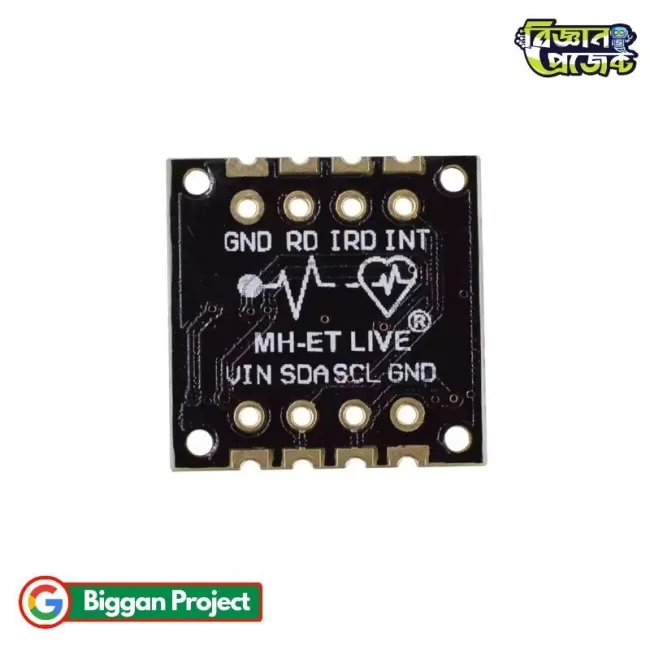
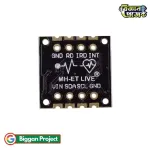
  • Connect the VCC pin to a clean 3.3V power supply output from your development board. Do not supply 5V directly to avoid damage.
  • Connect the GND pin to the common ground of your circuit.
  • Connect the SCL pin to the I2C clock line on your microcontroller (e.g., A5 on Arduino Uno).
  • Connect the SDA pin to the I2C data line on your microcontroller (e.g., A4 on Arduino Uno).
  • Install a standard MAX30100 open-source library within your IDE (such as Arduino IDE).
  • Upload sample pulse oximeter code and open the serial monitor or plotter to view real-time readings.
  • Place a finger gently over the optical sensor lens without applying excessive pressure to obtain stable readings.

Frequently Asked Questions (FAQs)

  • Q: Can I run the MAX30100 module directly on 5V supply line?
    A: No, operating voltage should be kept between 1.8V and 3.3V to prevent permanently damaging the integrated IC.
  • Q: Why are my SpO2 or heart rate readings fluctuating wildly?
    A: Pressing too hard on the sensor restricts blood flow in the capillaries. Place your finger lightly over the LEDs, keep your hand steady, and check for proper I2C pull-up resistors if data drops out.
  • Q: Does this module work with 5V microcontroller logic like Arduino Uno?
    A: While power must be 3.3V, I2C communication lines often work with 3.3V signals. If communication fails, use a logic level converter for the SDA and SCL lines.
  • Q: Can this sensor be used for certified medical diagnosis?
    A: This module is intended for research, prototyping, and educational electronics projects, not as a primary clinical medical diagnostic tool.

Challenges and Considerations

  • Excessive physical movement or shaking during measurement can introduce motion artifacts in the optical reading.
  • Pressing too firmly against the optical lens restricts local microvascular blood flow, leading to inaccurate pulse detection.
  • Some breakout boards may require adjusting onboard pull-up resistors depending on the microcontroller used.
  • Proper light enclosure or masking may be needed if operating under strong direct sunlight.

Compatibility

  • Arduino boards (Uno R3, Nano, Mega 2560, Pro Mini 3.3V)
  • ESP32 and ESP8266 NodeMCU development platforms
  • STM32 ARM Cortex microcontrollers (Nucleo, Blue Pill)
  • Raspberry Pi boards (via Python I2C library)
  • Other microcontrollers equipped with standard I2C buses

Future Enhancement Options

  • Integrating an OLED display (e.g., SSD1306) to show real-time pulse waveforms and oxygen saturation levels.
  • Connecting a Wi-Fi or Bluetooth module (like ESP32) to log health metrics directly to IoT platforms or mobile apps.
  • Adding a buzzer or alert LED to trigger warnings when heart rate exceeds programmed safe thresholds.
  • Designing a custom 3D-printed enclosure or finger-clip housing for cleaner signal acquisition and portability.

Benefits

  • Combines two essential biometric measurements into a single affordable optical sensor.
  • Consumes negligible power in standby mode, extending the operating duration of mobile setups.
  • Requires minimal external wiring thanks to the multi-device I2C protocol.
  • Extremely popular in the maker community with abundant library support and tutorial resources available in Bangladesh.

Conclusion

The MAX30100 Blood Oxygen and Heart Rate Sensor Module is a practical, power-efficient solution for biometrics, health monitoring, and IoT innovation. Its ease of I2C integration, combined with precise optical detection, makes it ideal for hobbyists, engineers, and students building practical health hardware or academic Biggan Project demonstrations.

max30100, max30100s, max 30100, max-30100, max30100 sensor, max30100 sensors, heart rate sensor, heart rate sensors, pulse sensor, pulse oximeter module, blood oxygen sensor, spo2 sensor, biometric sensor, max30100 arduino, max30100 esp32, max30100 stm32, max3010, max301000, max30010, max301000 module, max30100-sensor, max30100sensor, max30100 modules, sensor max30100, module max30100, pulse sensor module, pulse rate sensor, oxygen sensor module, max30100 pulse oximeter, blood oxygen module, pulse blood oxygen module, hat rate sensor, hart rate sensor, hurt rate sensor, blud oxygen sensor, oximeter senser, max 30100 senser, max30100 oximeter, max30100 bangladesh, max30100 bd, biggan project sensor, max30100 price bd, max30100 pinout, max30100 code, max30100 module bd, hart ret sensor, blud oxigen, pulse oxymeter, max30100 datasheet, heart rate module, spo2 module, max 30100 heart rate, max30100 blood oxygen

What is the price of MAX30100 Heart Rate and SpO2 Sensor Module in Bangladesh (BD)?

The latest price of MAX30100 Heart Rate and SpO2 Sensor Module in Bangladesh is ৳280 Taka. You can buy the MAX30100 Heart Rate and SpO2 Sensor Module at best price from Biggan Project.

arrow_upward